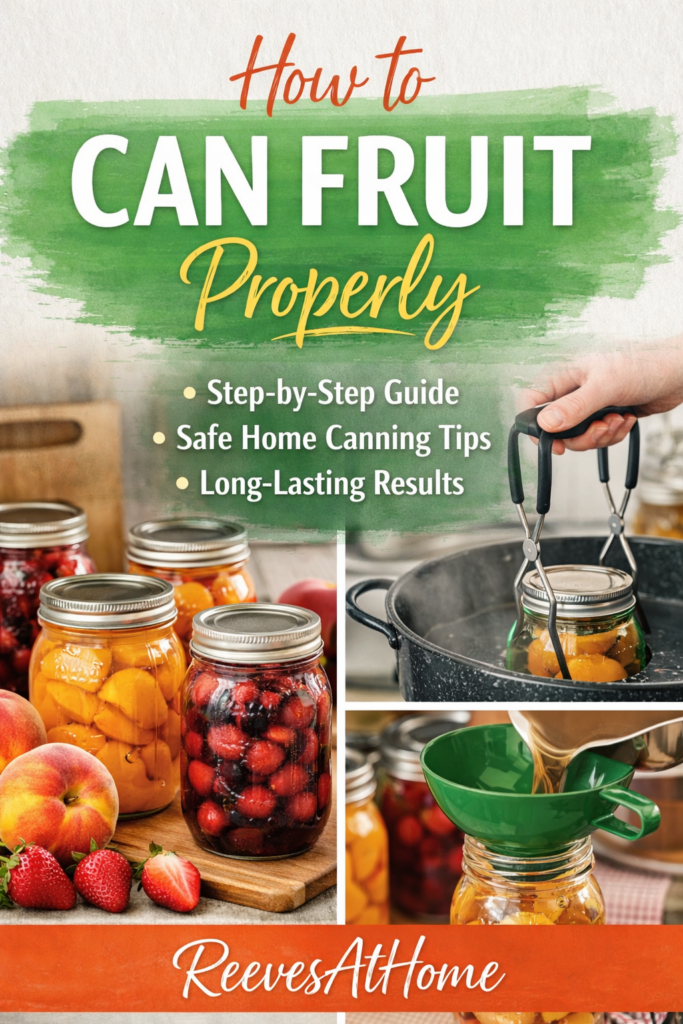
Canning fruit at home is one of the best ways to preserve fresh, seasonal produce and enjoy it all year long. Whether you have an overflowing peach tree, found a great sale at the farmer’s market, or simply love stocking your pantry, learning how to can fruit properly ensures safe, long-lasting results.
In this step-by-step guide, you’ll learn how to safely water bath can fruit, what equipment you need, and the most important food safety tips to follow.
Why Learn How to Can Fruit?
Home canning allows you to:
- Preserve seasonal fruit at peak ripeness
- Save money by buying in bulk
- Avoid added preservatives
- Control sugar levels
- Build a shelf-stable pantry
When done correctly, canned fruit can last up to 1 year in a cool, dark place.
Supplies You Need for Canning Fruit
Before you start, gather the proper equipment:
- Water bath canner or large deep pot with rack
- Mason jars (pint or quart)
- New canning lids and bands
- Jar lifter
- Canning funnel
- Large pot
- Clean towels
Important: Always use jars and lids made specifically for canning to ensure a proper seal.
Step 1: Choose and Prepare Your Fruit
Select ripe, fresh fruit without bruises or mold. Popular fruits for beginners include:
- Peaches
- Strawberries
- Blueberries
- Pears
- Apples
Wash fruit thoroughly. Peel, core, pit, or slice as needed. Some fruits (like peaches and tomatoes) benefit from blanching to easily remove skins.
To prevent browning, soak light-colored fruits in a mixture of water and lemon juice while prepping.
Step 2: Make a Syrup (Optional)
Fruit can be canned in:
- Water
- Fruit juice
- Light syrup
- Heavy syrup
For a basic light syrup:
- 2 cups sugar
- 4 cups water
Heat until sugar dissolves. Keep hot until ready to use.
Tip: You can reduce sugar if desired — sugar mainly affects sweetness, not safety in fruit canning.
There are two main methods:
Raw Pack
Place raw fruit directly into jars and pour hot liquid over it.
Hot Pack (Recommended)
Heat fruit in syrup first, then pack into jars. This reduces air and improves shelf life.
Fill jars, leaving about ½ inch headspace at the top.
Remove air bubbles with a non-metal utensil, wipe rims clean, and secure lids fingertip tight.
Step 4: Process in a Water Bath
Place jars in a boiling water bath canner. Ensure jars are covered with at least 1–2 inches of water.
Bring to a rolling boil and process according to fruit type:
- Peaches: 20–30 minutes
- Apples: 20 minutes
- Berries: 15–20 minutes
(Adjust time for altitude if needed.)
After processing, remove jars carefully and place on a towel. Let sit undisturbed for 12–24 hours.
You should hear a satisfying “pop” as jars seal.
Step 5: Check Seals & Store
After 24 hours:
- Press the center of each lid
- If it doesn’t flex, it’s sealed
- Remove bands for storage
- Label with date
Store jars in a cool, dark place for up to 1 year.
If a jar doesn’t seal, refrigerate and use within a few days.
Important Canning Safety Tips
- Always use tested recipes
- Do not alter processing times
- Adjust for altitude
- Never reuse canning lids
- Discard jars that show mold, leaks, or off smells
Because fruit is naturally high in acid, it is safe for water bath canning. Low-acid foods require pressure canning.
Frequently Asked Questions About Canning Fruit
How long does canned fruit last?
Up to 1 year when stored properly.
Can I reduce the sugar?
Yes. Sugar is optional for safety in fruit canning.
Do I need a pressure canner for fruit?
No. Most fruits are safe for water bath canning because they are high in acid.
Final Thoughts on How to Can Fruit Properly
Learning how to can fruit properly is a simple, rewarding way to preserve seasonal flavors and stock your pantry naturally. With the right tools and safe methods, even beginners can confidently start canning at home.
Once you try it, you might never look at fresh peaches the same way again.
I hope you enjoyed learning about how to properly can fruit! If you liked this one, you should check out my Cheap and Easy Smoothie Recipe and the rest of my blog. If you have any questions, please contact me at: [email protected]